 Cameron Armstrong
The Last Brief, Chapter 2: The Notebook.
How to Build the Agency's Memory
A month ago I published an essay called The Last Brief. It argued that the modern agency is a relay tower dressed up as a hierarchy. AI doesn't replace the thinking, it replaces the routing.
I didn't expect it to land the way it did.
What surprised me wasn't the agency response. I'd been writing that essay in my head for years. What surprised me was everyone else. Different industries, same message: this is also us.
So I owe a sequel. Actually, I owe three.
The Last Brief proposed three layers for the agency of the future. A world model. A skills layer. An operating rhythm. Each one deserves its own piece. Each one is now buildable. This is the first piece.
If I'm honest, I'd rather be building than writing. The world is moving faster than I can put a sentence together. But if the architecture isn't named, people won't know what to build, and watching the wrong thing get built, or worse, our industry being decimated by some tech bros in Silicon Valley, that scares me more than the silence does.
I'm writing this on a four-hour train ride with shaky wifi. There's a low-grade anxiety about not being able to talk to Claude and use every minute productively, which means I've had to revert to writing.
I won't pretend this is all my own hand. I've had help from AI. You probably have too with most things now. But it's a sparring partner, not a ghostwriter. Every topic, every feeling, every argument here is mine. The AI just helps me hold it all in one place and turn it into a story.
So without further ado, this is The Notebook.
Why I'm calling it that
There's a Christopher Nolan film from 2000 called Memento. If you haven't seen it: a man called Leonard wakes up every morning having lost his memory. He has a wife who has been murdered, a killer to find, and a brain that can no longer hold anything new. So he survives by writing on himself. Tattoos for the things that matter. Polaroids for the people he meets. Notes in his jacket pocket for what he's supposed to be doing today.
He functions. He even solves problems. What he cannot do is compound. Every experience stays external. Every insight stays scattered. He's intelligent. He's just not learning.
That's most agencies, still, in this AI world. The campaign data exists. The research subscriptions exist. The decks. The dashboards. The senior people who have seen everything before. None of it compounds. The tattoos walk out the door every time someone resigns. The agency wakes up every Monday in a fractured present.
Every time someone uses AI they're still creating a new chat with no prior context and generic answers.
This isn't new. It's just newly fixable.
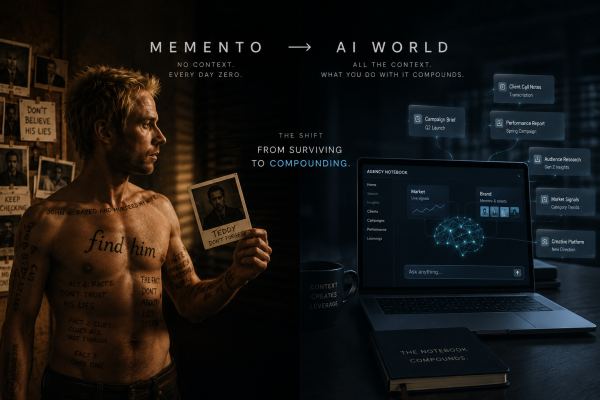
The fix is called a world model. But I've come to hate that phrase, because it sounds like the kind of thing a holding company would put on a slide and never build. So I'm calling it something else.
I'm calling it a notebook.
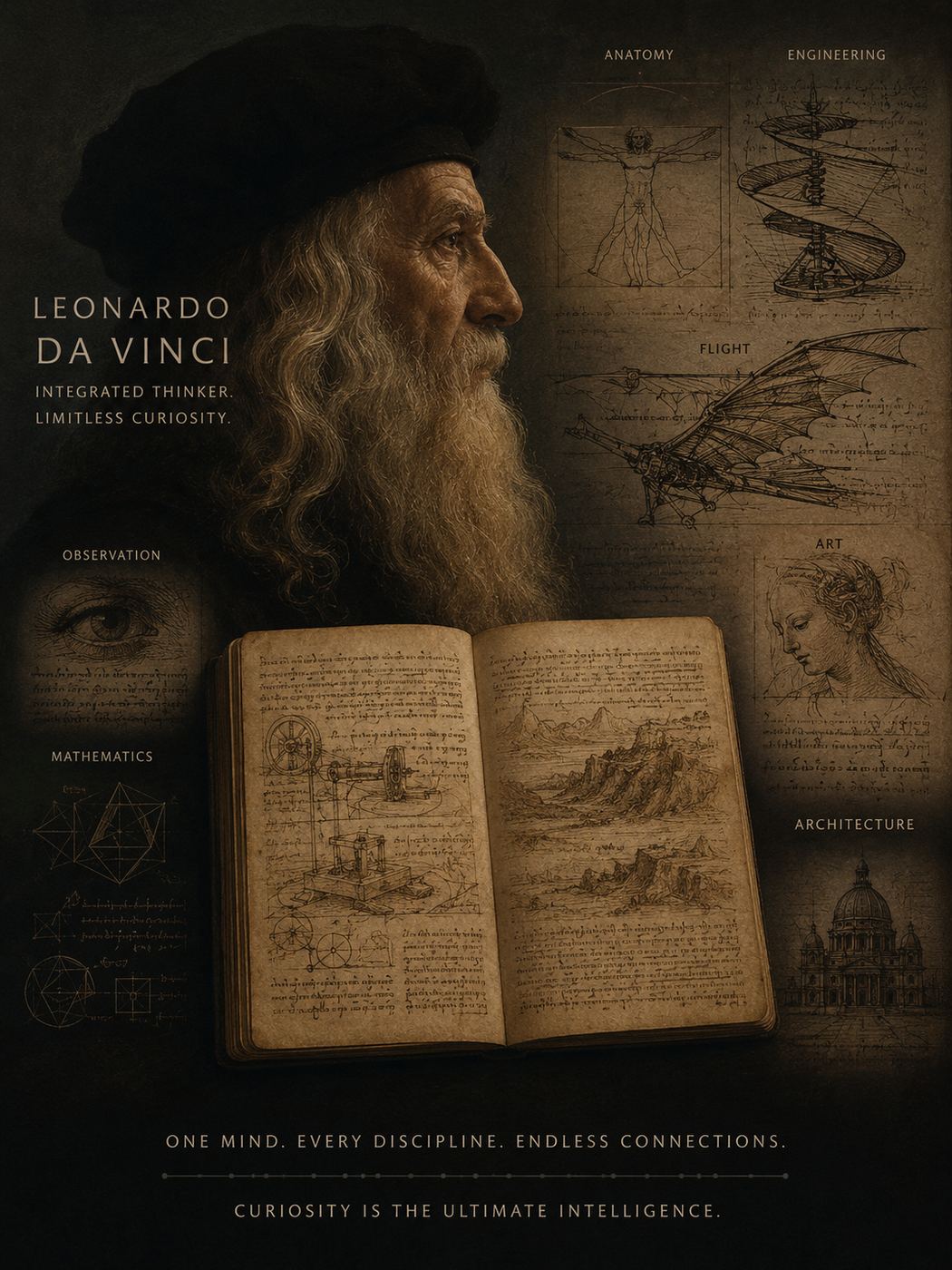
Five hundred years ago, a man in Florence carried one everywhere. He filled thirteen thousand pages with observations across his lifetime. Water and hair. Cadavers and saints. Bridges and battle plans. Bone structure and the way a horse moves. He didn't have a strategy department. He didn't have a measurement department. He didn't even have a desk.
He had a notebook.
His name was Leonardo da Vinci, and the notebook was where his world lived. Every painting he produced was a query against it. Every machine he designed pulled from a different page.
He didn't know what he was doing was integrated thinking, because in his time the disciplines hadn't been pulled apart yet. He was just trying to see clearly. That's the substrate I want to talk about.
The fantasy that has failed before
I have to be honest before I go further.
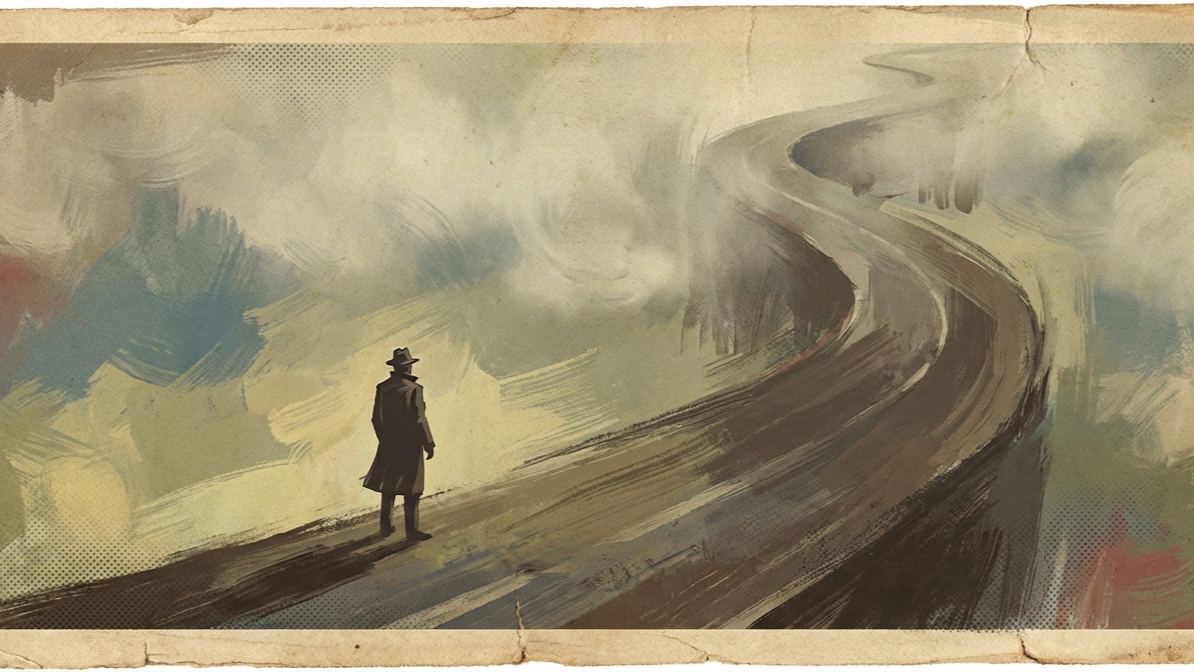
You have heard a version of this argument before. The Customer Data Platform that would give us one view of the customer. The knowledge graph that would connect every insight. The brand management system. The data lake. The single source of truth that immediately produced five competing truths.
If you've worked in this industry for more than five years, you've watched at least one of those projects launch with a deck and die in maintenance. You should be suspicious of what I'm about to tell you.
So I want to be clear about the difference. It isn't the technology. The data structures haven't changed. The cloud bills aren't smaller. The dashboards haven't suddenly become trusted.
Every system I just listed was built to hold information. The notebook is built to change what you do with it. That is not a feature difference. It is a different category of thing.
A database stores information. A knowledge system connects information. A notebook changes behaviour.
The first is table stakes. The second is what most internal platforms tried and failed to deliver. The third is the only thing worth building. If a system contains everything you know about a client but doesn't change what you do for that client, it's not a notebook. It's a beautifully structured library that nobody opens.
That distinction is the whole essay.
And there's a technical reason it works now and didn't before. The shift from API to MCP; the new protocol that lets AI models read across your tools, validates the change. The model gets access to context plus functions and does the reasoning itself. The system doesn't need to be told what to buy. It works it out from what it knows about the brand, the goal, the campaign, the market.
Execution is now a commodity. The reasoning layer is the new battleground.
The thing that has always been there
The notebook is not new.
The most valuable asset in an agency has never been the process, the deck template, the rate card, or the org chart. Let's be honest, we all know agencies are circulating the same decks, the same process docs picked up as people move around.
The most valuable asset is the accumulated commercial memory held inside senior people. What the client actually believes. What the market punishes. What the brand can and can't do. What's been tried before. What the numbers hide. What the politics require. What actually moves the business.
Agencies call this experience. They sell it as senior talent. They bill it at a premium and build the hierarchy around protecting access to it.
Operationally, it's an undocumented notebook.
Every time a senior planner leaves, the agency loses a working copy and has no backup. Every time a pitch is lost, the institutional learning evaporates. Every time a junior is promoted, the knowledge transfer happens through osmosis and accident.
Agencies have always had notebooks. They were trapped inside senior brains, scattered across decks, and lost every quarter when someone took a counter-offer.
The technology question isn't whether to build them. It's whether to keep losing them.
The second Renaissance
There's a deeper argument here, and I want to name it because it's the thing that makes this essay matter beyond advertising.
The Renaissance was a brief window when integrated thinking was structurally possible. Leonardo was a painter, an anatomist, an engineer, a hydrologist, a military strategist. The reason he could be all of those things wasn't that he was a genius, although he was. It was that the volume of knowledge in each domain was still small enough for one person to carry.
That window closed. The knowledge in each field grew beyond what any individual could hold. Specialisation became the rational response. The agency holding company is the apex form of that response: thousands of specialists held together by middle managers carrying context between rooms.
For three hundred years, polymathic thinking has been structurally impossible. AI changes the constraint.
Recommended by LinkedIn

The substrate can finally hold what no individual could. The notebook can be externalised. Not to replace the specialist, but to give every specialist access to the integration the specialist couldn't perform alone.
We're not going back to the Renaissance. We're entering a second one, with different mechanics.
That's why people from all kinds of backgrounds messaged me about The Last Brief. The same pattern is opening up in every profession built around scarce specialist knowledge. Watch what happens when the knowledge stops being scarce.
What it actually looks like
Three layers. I'll keep it concrete.
The market layer. Everything happening outside the building. Competitive movement, share dynamics, category signals, cultural inputs, search trends, social listening, regulatory shifts. Updated continuously. Queryable in plain English. Not a deck someone pulls together for a quarterly review, a live model that something or someone refreshes every week.
The brand layer. Everything the brand is and isn't. Distinctive assets. Memory structures. Attention curves. Tone rules. Audience definitions. The behavioural patterns the brand commits to repeating. The things that make the brand recognisable across time, regardless of platform. Most agencies still treat brand as a guidelines PDF rather than a queryable layer. That's the gap.
The performance layer. Everything that has happened and what it taught you. Historical campaign delivery, attention-weighted impressions, what worked, what didn't, what surprised you. Connected to live platforms so the data doesn't decay.
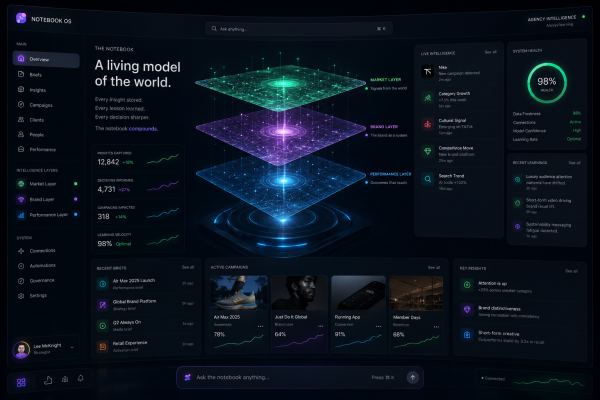
Three layers. One substrate. Every brief, every recommendation, every QBR is a query against it. Every meeting feeds back into it. Every campaign that runs improves it.
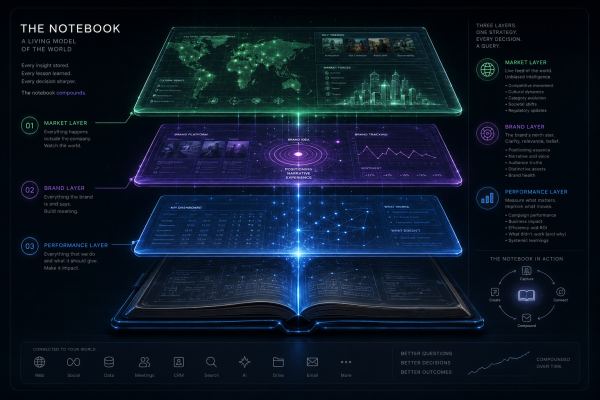
Most agencies have fragments of layer three, patchy bits of layer one, and almost nothing on layer two, because layer two has lived in slides and in the heads of the people who wrote them.
The honest part
I have to be careful here. The temptation when writing this kind of essay is to claim it solves problems it doesn't solve.
A notebook only works if it stays alive.
Most attempts at this die in month six. The technology doesn't fail. Nobody owns the truth layer. Nobody updates it. It creates more work before it removes work. And eventually someone with a deadline routes around it, and then someone else does, and the project quietly becomes "a good foundation for later."
The hard part isn't representation. It's governance.
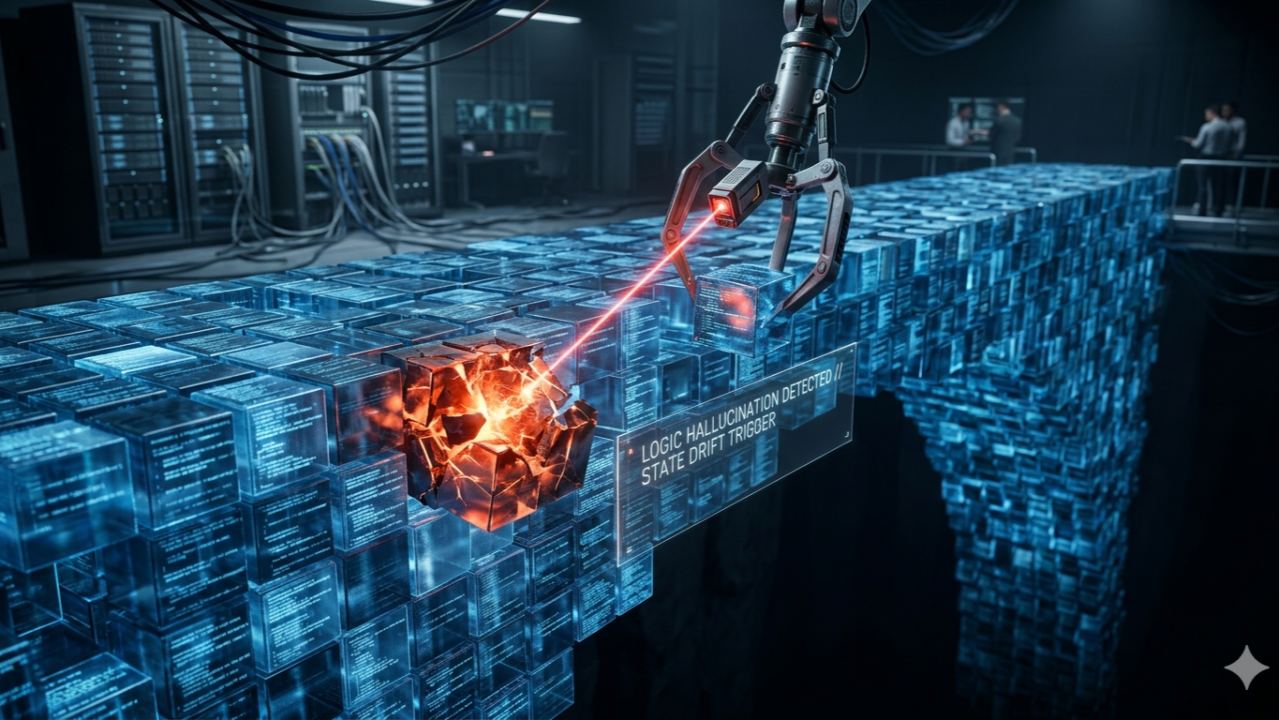
Who decides what goes in. Who decides what's true. Who resolves contradictions. Who updates it after a client call. Who is accountable when the model gives bad strategic advice. If you don't have answers to those questions, you have a beautifully structured hallucination engine.
Daniel Gilbert at Brainlabs has written the cleanest published account of how to actually do this at scale; the trio model, the skills architecture, the factory manager pattern. Worth reading alongside this. I'll be writing more about my own version of governance, built around what I call resolvers. The short version is that the notebook has to maintain itself, or it doesn't survive contact with real work.
How to actually start
If you read this and want to start building, here's the honest version.
You won't build the whole thing. Don't try.
Pick one wedge. Pitch intelligence. Client onboarding. Brand memory. Creative effectiveness. Performance diagnosis. Category intelligence. QBR generation. Briefing quality. Pick one painful place where information disappears, and make it durable, for one client first.
Then document everything.
Treat the notebook like a new starter. It needs context, exposure to the work, time. Record your meetings. Transcribe your voice notes. Save your decks. Save the back-and-forth on Slack. Save the rationale, not just the output. Feed it the messy thinking that produced the work, because that's where the judgement lives. The polished version is the part that survives anyway.
The tools that matter right now: Notion as the substrate. Granola for meetings. Obsidian for the personal layer. Anything with an MCP connection, so the notebook can read across your stack rather than locking you into one vendor.
I'll be building platforms to make this easier. For now, if you want to compare notes on what's working, message me.
Why this is personal
I started in this industry at 17. I went in with one rule: be a sponge. Absorb everything, ask questions nobody asked, learn how the whole thing connected.
The reason that worked is that nothing about my early apprenticeship was efficient. I pulled reports nobody read. I sat in meetings I didn't understand. I formatted decks at 11pm. I watched senior people make decisions and didn't know why they were the right ones until months later, when I'd seen enough of them to start guessing. I learned by being inside the routing.
If I were starting today, that path wouldn't exist. AI handles all of it.
That isn't a tragedy. But it does mean the apprenticeship has to move somewhere else. And I think the place it moves is the notebook itself. Juniors stop learning by pulling reports and start learning by interrogating the substrate. By finding what's wrong with it. By being the people who feed it, who challenge it, who keep it honest. The Renaissance workshop, restored.
My own notebook is the reason I can write essays like this one in the gaps between meetings. It knows I started at 17. It's read every post I've ever published. It's seen every project I've shipped, every Thailand journal entry, every voice note I've left in the back of a cab when an idea wouldn't wait. It doesn't tell me what to think. It just makes sure I don't forget what I've already thought.
You and I could ask the same question and get different answers, because mine isn't a generic assistant. It's an externalised version of how I see the world. The best parts of me, on tap.
That's what this is. Not a database. Not a dashboard. A working memory that finally compounds.
Here's what that actually looks like, because abstract is easy and the practice is the hard part.
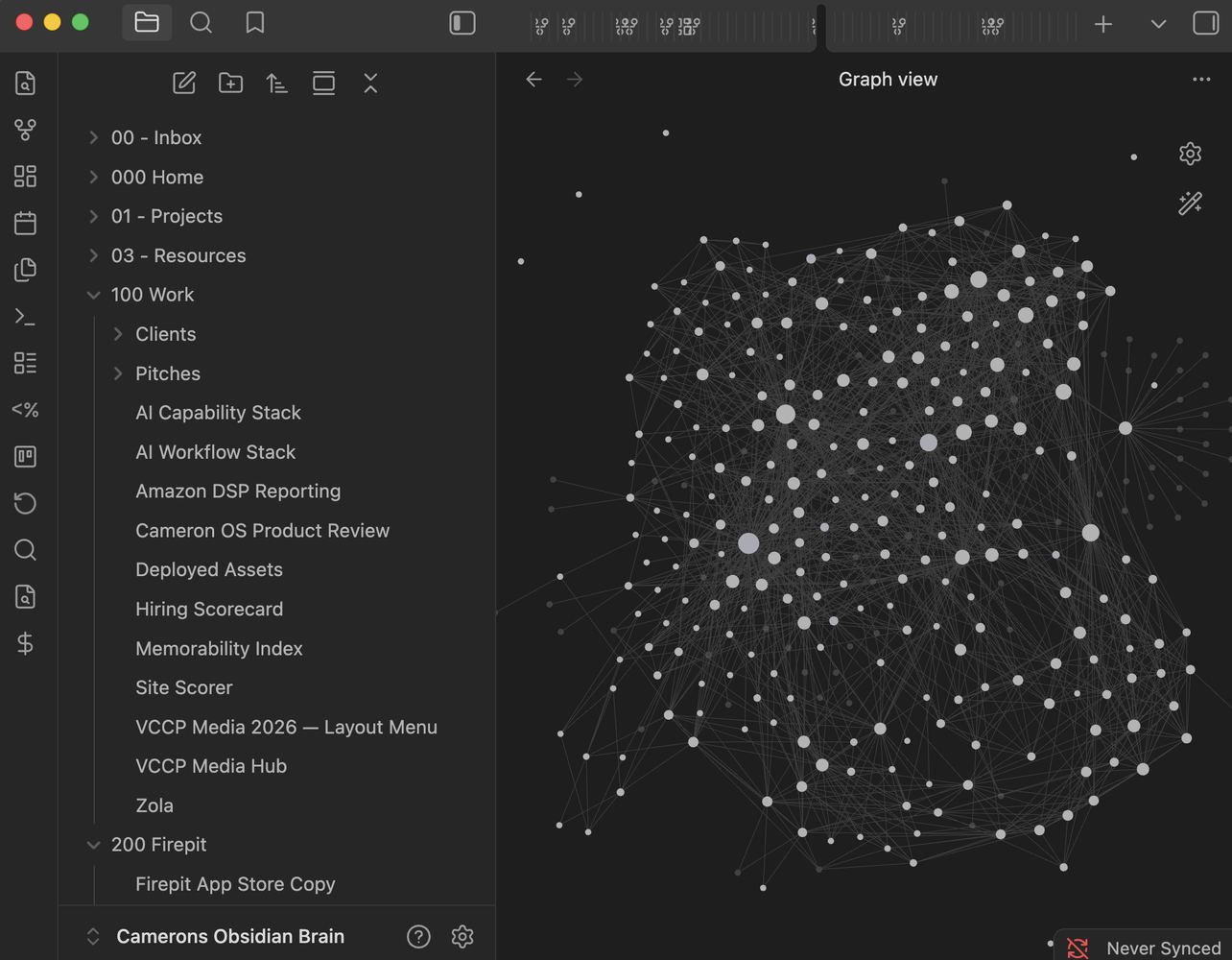
Every day I have a daily review. It goes into Obsidian. Every document worth keeping goes in; my LinkedIn posts, my journal, reflections, the products I'm building, the strategy pieces, anything I read online that I don't want to lose.
None of it is filed neatly. That's the point. It connects itself. A note on attention economics links to a journal entry from Thailand links to a half-built product spec links to something I read at 1am. Over time it stops being a folder of documents and becomes a map of how I think, with the connections I'd never have made on my own already drawn.
That screenshot is mine. Every dot is a thought. Every line is a connection I didn't have to remember to make.
The hard part isn't doing this for yourself. It's doing it for a company. That's also where the entire advantage is.
The close
Leonardo's notebooks nearly didn't survive. He left them to his apprentice. The apprentice's son sold them piecemeal. Pages were cut up. Some are still turning up in private collections.
The most valuable intellectual archive of the Renaissance almost didn't make it because no institution understood what it was.
That's what every senior planner's brain is, right now, in every agency.
The notebook is the institution that finally keeps them.
The playbook is still open.
This is the first build.