 Cameron Armstrong
Digital advertising's biggest problem may be the fact that there is no social proof.
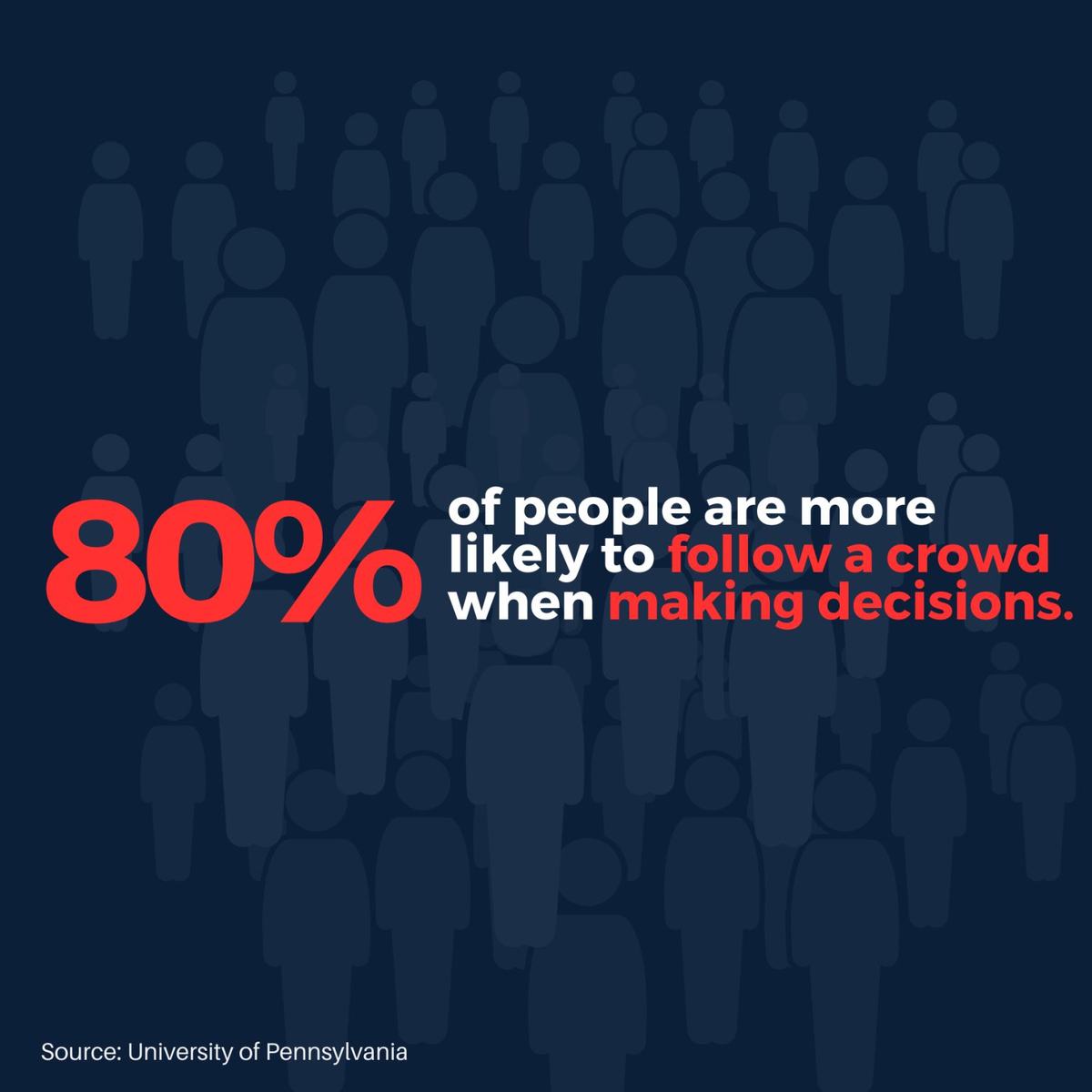
People often look to what other people are doing, we assume if others are doing something it must be a good idea.
There's a great example of herd mentality in New York City.
There are two food carts on the same street.
NY Magazine ranked the first as one of the top twenty food carts in the city, people wait over an hour to get a meal from the stand, and at certain times of the day, the line will stretch down the block.
The other cart rarely has a line.
I know what you're thinking, the food from the first stand must be exceptional so people are willing to wait.
You're partially right.
But both food stands are actually run by the same owners, selling an almost identical product. Why does one have a queue and one not?
Social proof.
For something to be common knowledge, it's not it’s not enough for everyone to know it. Everyone must also know that everyone else knows it.
For advertising to be effective, it’s not enough for it to be seen by a single person or even by many people. Someone has to know that everyone else has seen it.
This may be digital advertising's biggest floor.
In the online world, everyone lives in their own echo chamber. We have no idea what our friends are doing online and what ads they may be seeing.
This may be why mass-market advertising like TV is more effective at brand building than precision-targeted, highly personalised, relevant advertising.
The obsessions of hyper-personalised messaging and targeting make advertising a private, rather than public, experience. It keeps us from knowing what advertising our friends are seeing.
Which in some way keeps us from knowing what brands may be culturally acceptable.
Maybe, the best ad for one is in fact the best ad for all.
Inspiration for this post has come from Bob Hoffman's blog posts and Jonah Bergen's book; 'Contagious, how to Build Word of Mouth in the Digital Age. I'd go as far as to say that it's one of the best marketing books I've ever read.