 Cameron Armstrong
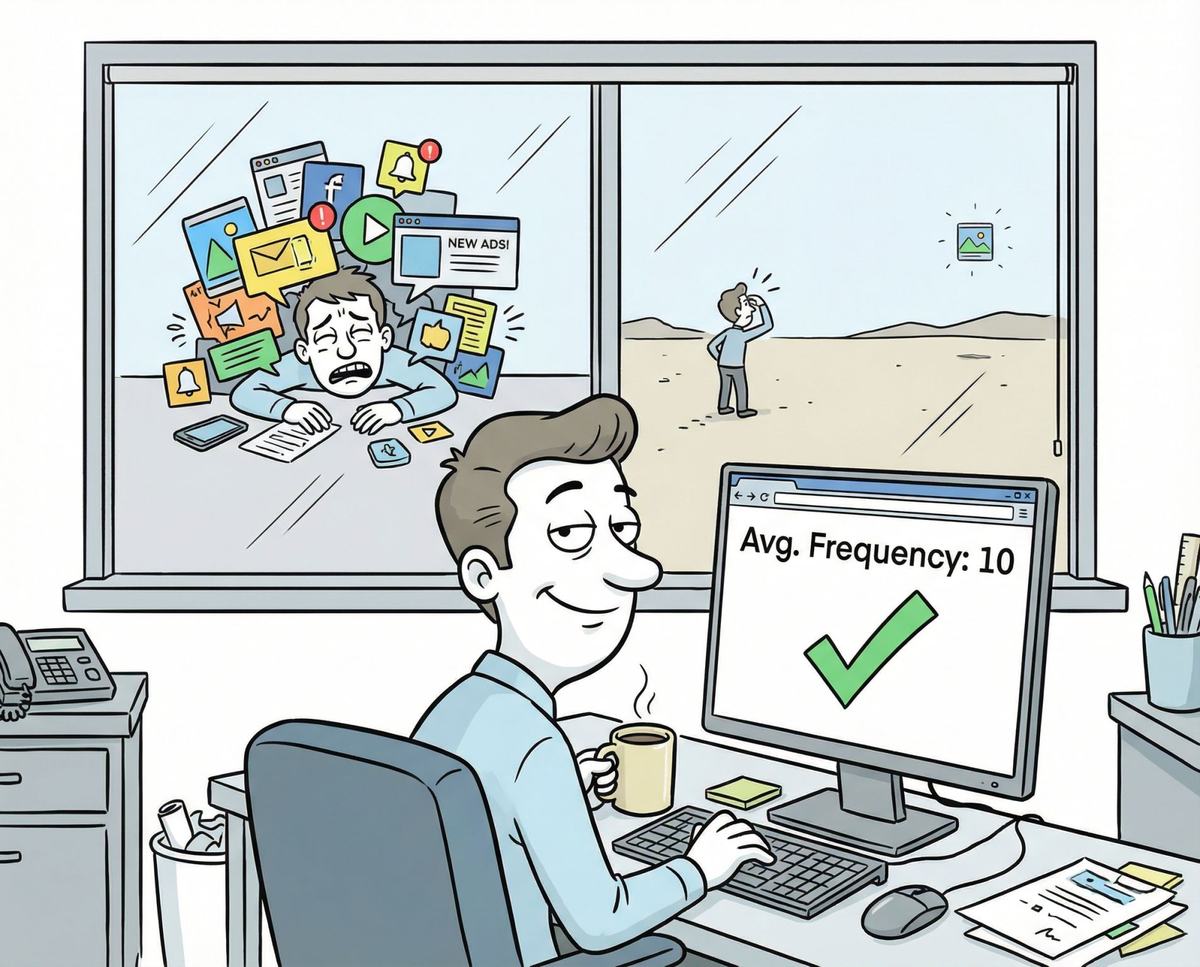
Half your body's in the oven, half in the freezer.
On average, you're fine.
That's what an average frequency of 10 is hiding.
40% of your audience saw one ad. Another segment got hit a hundred times.
This is what happens when channels operate in silos. Each one optimising for its own metrics, blind to what's happening everywhere else.
Cross-media, cross-channel buying fixes this. Not by buying more places, but by treating media as a single decision engine.
One Platform. One objective. One view of where the next pound works hardest.
It's not about buying everywhere. It's about letting demand, attention, and outcomes decide where money flows in real time.
Traditional planning locks budgets to channels in advance. Cross-media buying follows behaviour as it shifts: CTV in the living room, audio on the commute, DOOH at the point of sale. The budget follows the day, not a deck.
When channels are planned separately, everything looks successful. When they're connected, you can finally ask: what worked because of this channel? What would have happened anyway? Where does the next pound actually work hardest?
Icrementality becomes a planning input, not something you retrofit in a post-campaign deck.
And then there's creative.
Cross-channel systems quickly reveal which ideas travel, which messages scale, which formats unlock multiple environments. You stop guessing what works. You see it in real time, across every touchpoint.
Better still, you know what's reaching users, when, and in what order. You're not just serving ads anymore. You're sequencing a story across the entire journey.
The advantage isn't cheaper impressions. It's creative that compounds across touchpoints.
Cross-media buying isn't an efficiency play. It's an optionality play.
Move faster than culture. Respond before competitors. Learn continuously instead of resetting every quarter.
That's the strategic advantage.
So why aren't more brands buying this way?