 Cameron Armstrong
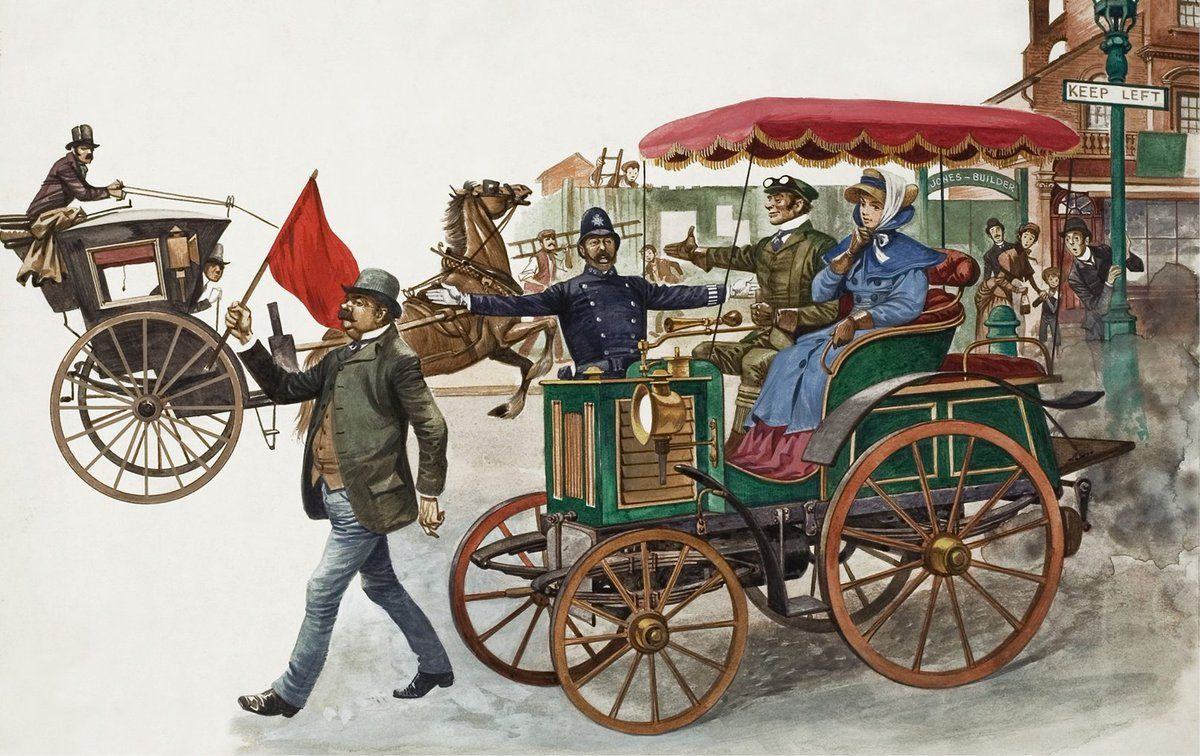
The Red Flag Act of 1865 required a man to walk ahead of every vehicle waving a red flag.
It took 31 years to repeal.
When the automobile arrived, nobody knew what to do with it. People were scared. So they did what humans always do with new technology: they tried to control it by slowing it down.
A literal human in the loop. Walking pace. Flag in hand. Progress held hostage by fear.
We look back and laugh. But are we doing the same thing now?
I've seen stories of entire Silicon Valley teams being replaced by AI agents. That shouldn't be the direction of travel for everything. But if you're not at least considering where AI fits, you're already falling behind.
The question isn't whether to have humans in the loop. It's whether those humans are adding value or just waving flags.
Look at what's happening in advertising. Dentsu can't sell a $4.5bn business. Not because of bad management — because buyers looked at the model and couldn't see how to make it work.
For decades, holding companies scaled by aggregating clients, capabilities, and talent. But scale only works if there's something scarce to scale. When AI makes the scalable bits accessible to everyone, the value of having thousands of people doing those things efficiently doesn't compound. It evaporates.
The old model is being scrutinised. And it should be.
Some oversight is essential. Guardrails exist for good reason.
But some processes are just fear dressed up as caution. Approval chains that exist because they always have. Manual checks that made sense in a slower world. Layers of review that protect comfort, not quality.
Every company has red flags. The question is whether yours are protecting you or holding you back.
This post probably won't be popular. But if you listen to the AI CEOs, read the research, watch where the technology is heading, this is the direction of travel.
Connection, taste, judgment, ingenuity — these will matter more than ever.
Just make sure you're using that energy in the right places. Not walking in front of cars.