 Cameron Armstrong
Consumer attention isn't one thing.
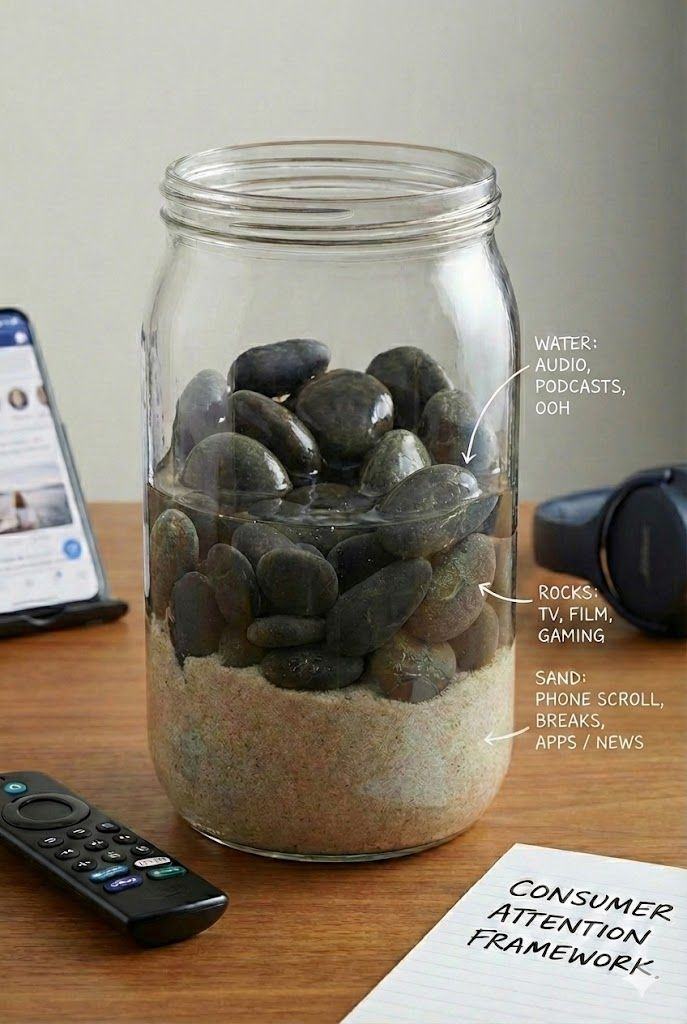
It's rocks, sand, and water.
I came across this framework recently and it's stuck with me as a useful way to think about how people actually spend their time.
Rocks are the big blocks. The TV in the evening. The film at the cinema. The moments that demand your full attention for an extended period.
Sand fills the gaps. The phone scroll on the morning commute. The quick break between meetings. The bite-sized moments where people are looking for a distraction.
Water overlays everything else. Audio while cooking. A podcast during the gym. The things that run alongside other activities.
And here's the thing most media plans miss: even the rocks have cracks now.
Someone watching TV in the evening is probably scrolling their phone at the same time. The 'big block' attention isn't as solid as it used to be.
When you map out a real day, it becomes obvious:
Morning commute — phone, audio, out of home.
Working hours — sand moments, quick scrolls, mental breaks.
Lunch — conversations, real world moments.
Evening — TV with a second screen in hand.
The 24 hours haven't changed. But how attention flows through them has.
The brands winning attention aren't fighting for the rocks. They're flowing into the gaps.