 Cameron Armstrong
Bigger doesn’t necessarily mean better.
Less competition in the market stifles innovation.
Less innovation makes advertising less effective.
As an agency, your primary incentives should align with your clients, growing the brand's business. Success for one is success for both.
If as a holding company, your definition of success is shareholder growth, you end up finding shortcuts that aren’t best for your clients, in order to return a strong quarter.
And once all methods have been drained, rather than reinventing the model, you find a quick way out.
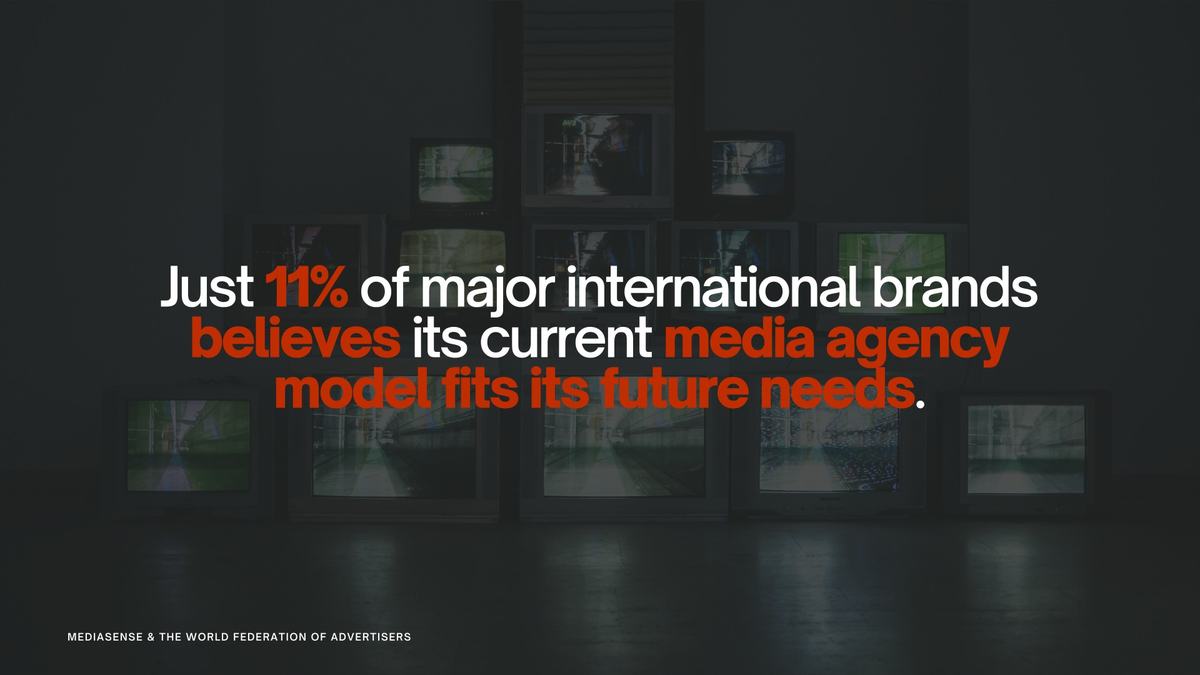
It’s no secret the model is broken.
The story of the day may fundamentally restructure our industry in the long term, and I’d argue not in favour of the big guy.
Coming back to my opening line, consolidation isn’t always a good thing.
As size increases, the ability to pivot decreases.
Phase transitions are required for structural reorganisation and adaptation to new markets.
There is an analogy that I feel describes the current state of advertising holding groups.
Imagine a large bathtub filled with water. Hit the surface with a hammer: a splash, and the hammer slips through the liquid.
Then lower the temperature until the water freezes. Strike again, and the surface barely moves. The same molecule behaves like a liquid in one context and a rigid solid in another.
As the temperature decreases, binding forces get stronger, meaning there's no room for movement between molecules.
As teams and companies grow larger, everyone's stakes in driving outcomes grow lower, with too many layers, processes, and inefficiencies to move fluidly and cause disruption.
The holding group owns hundreds of companies through acquisitions, but there is a legacy in each of those hundreds of different companies that were made to compete with each other, not work together, that is now out of control to the point where they are dysfunctional.
While I can't speak for advertisers and clients, research shows they want simplification, integration, and flexibility.
They need to be able to connect with their customers on multiple channels and platforms, in a media landscape that is changing drastically.
A recent study showed that 70% of advertising campaigns failed to generate a meaningful ROI.
This doesn't mean that advertising isn't profitable. It just means there's a lot of work to be done to up the standard.
Agencies need to accelerate growth for brands, just like venture capital and private equity firms do but do it with technology and creativity rather than through financial engineering.
Agencies need a shift from brand stewards to growth catalysts.
Agencies need to stop focusing on the holding groups' stock value, and instead focus on their client's growth.
It's not about pumping out ads and campaigns.
It's about identifying growth opportunities, designing solutions, and using tech and creativity to make them happen faster.
These slides I made last year, are seemingly relevant today...